Future Summoning Methods
A look at every summoning mechanic planned for Kingdom Duels, and how each one will work.
It’s finally time! As we prepare for our final set of the Millennium Chapter we will be now unveiling the Summoning Mechanics that Kingdom Duels will have in the future. What follows is a list of all the planned methods of summoning monsters, and i will provide specific information regarding each one below. These are subject to change, but are more or less already well defined.
While many of these mechanics won’t see a proper release in the story for a long time, the gameplay systems will be set in place already so players and designers can come up with their own interpretation of cards based on these mechanics.
Disclaimer: the artwork of these specific arts was made using generative AI, as these cards were meant for demostration purposes.
Normal Monsters
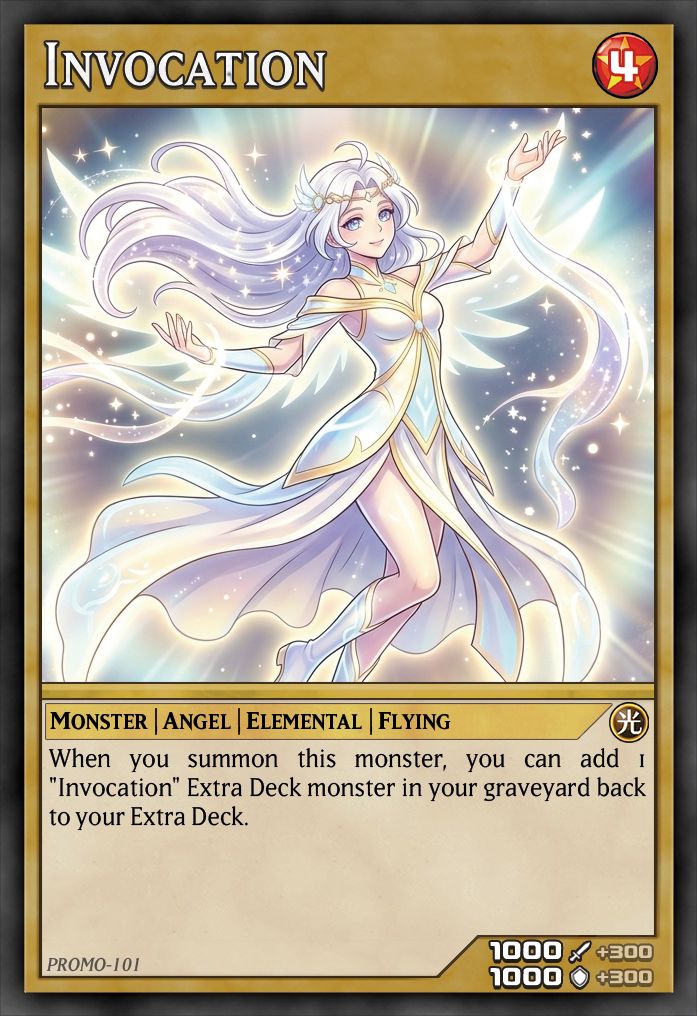
These are the regular Main Deck monsters that you know pretty well by now. I will be using this “Invocation” character as an example as i go through all the other Summoning Methods and see how it changes with each one.
Fusion and Ritual Summon
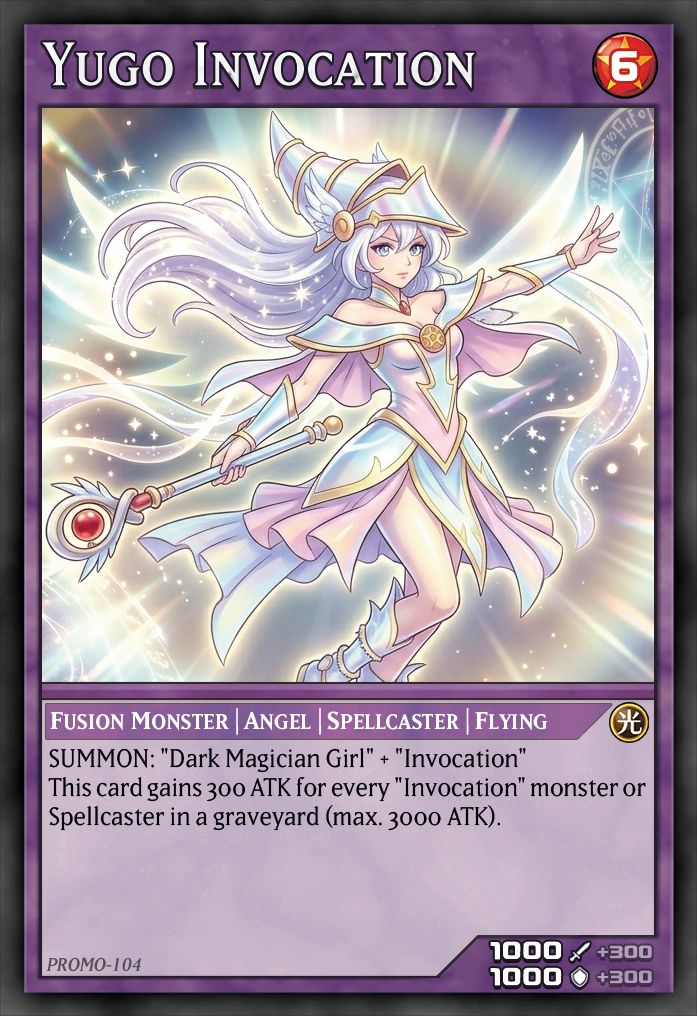
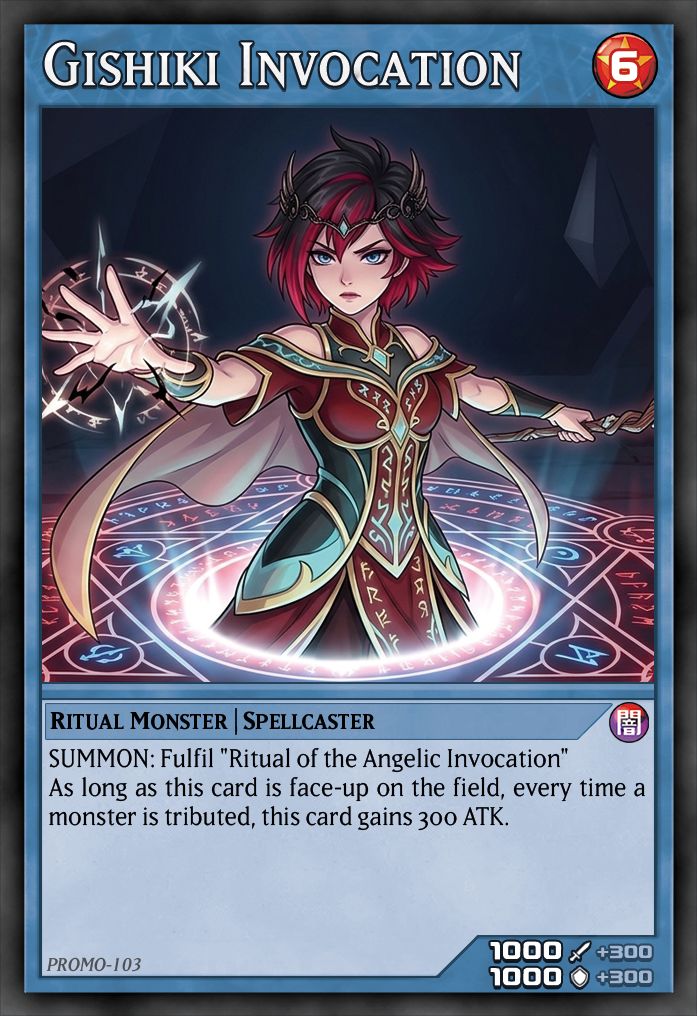
This traditional pair of summoning mechanics has some differences regarding Yugioh but they keep and embrace their core identity.
Fusion Summon (Yugo Shōkan)
Fusions are the merge/combination of two or more specific monsters. We don’t pursue generic fusions. Visually, a Fusion should show at least some elements of their components.
They are summoned by using the card “Fusion” and having the materials in hand and/or field, which are then attached to the Fusion Monster. They have Levels as their Grade symbol.
Ritual Summon (Gishiki Shōkan)
These are monsters that require a specific ceremony to be performed in order to bring them to the battlefield, as they are sealed and need a series of steps to be performed first.
They are summoned by fulfiling their own unique “Ritual” spell card that details what kind of sacrifice is needed, as they usually require to tribute one or more monsters from the field. They have Levels as their Grade symbol, and introduce the idea of “tribute” to the game.
Alter and Token Summon
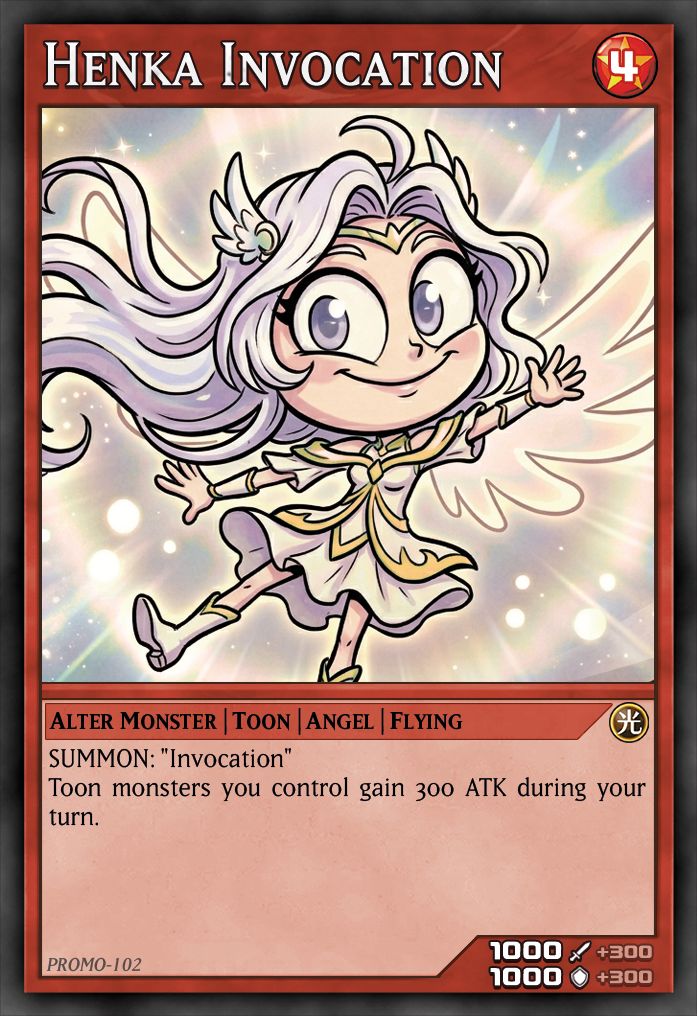
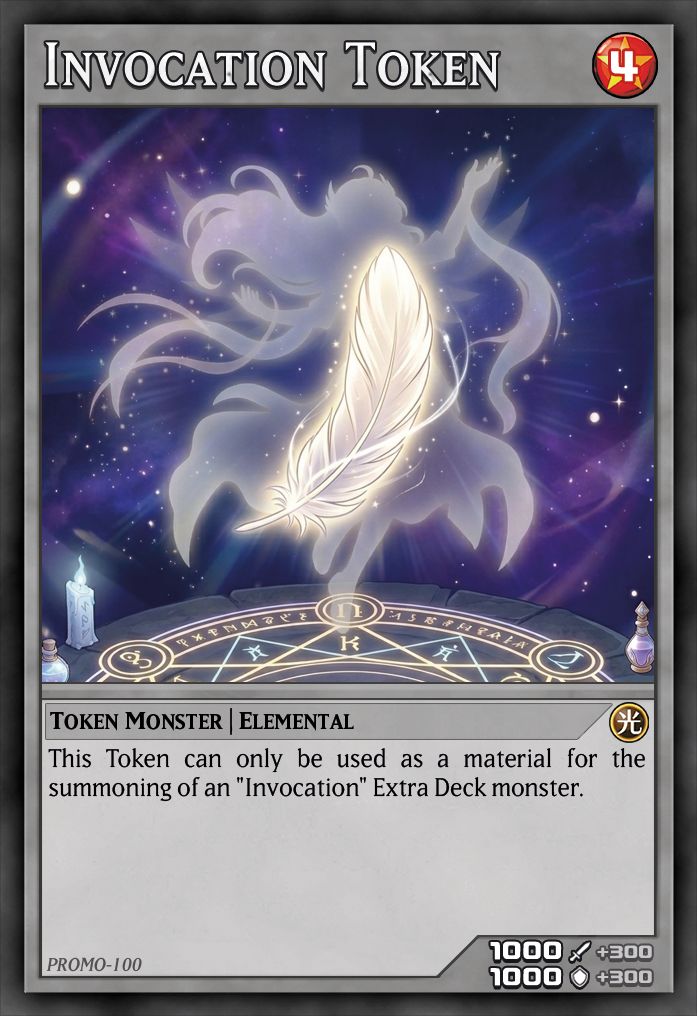
These were the first two big deviations from the original game, as they were created to address some missing elements from the anime that weren’t present in the card game properly.
Alter Summon (Henka Shōkan)
These are monsters who have been transformed in some way, without combining with other monsters. There are multiple ways of Alter Summoning and each one is represented with a specific Type that is unique to Alter monsters (Toon, Zombie, Timeshifted, etc.)
Alter Monsters were a natural design decision even back in 2014 when this project started, as the anime showcased really unique monsters that were transformations of other monsters and we needed some way to represent them visually as individual cards.
They are summoned by using a specific card that allows the player to Alter Summon a specific monster of a certain Type, require a material monster on the field who is then attached to the resulting Alter Monsters. They have Levels as their Grade symbol.
Token Summon (Tokun Shōkan)
Not really a summoning mechanic but i feel they can still be slotted in this list. Token Monsters are summoned through the effects of other cards. Unlike the original game, in here they have unique properties and effects. They can only exist in the field or in the Extra Deck, and have Levels as their Grade symbol.
Some elements in the anime weren’t really fitting the definition of Spell, Traps or Monsters, which is why the need of a “Token” system was needed for the game to represent obscure ways the anime decided to tell their duels.
Integration and Dimension Summon
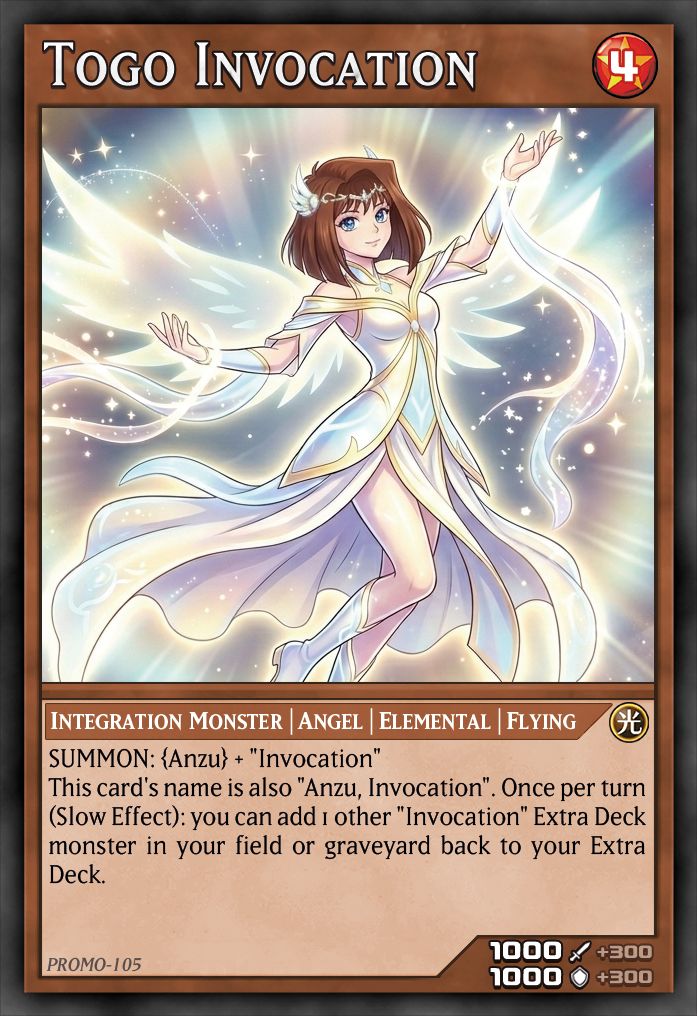
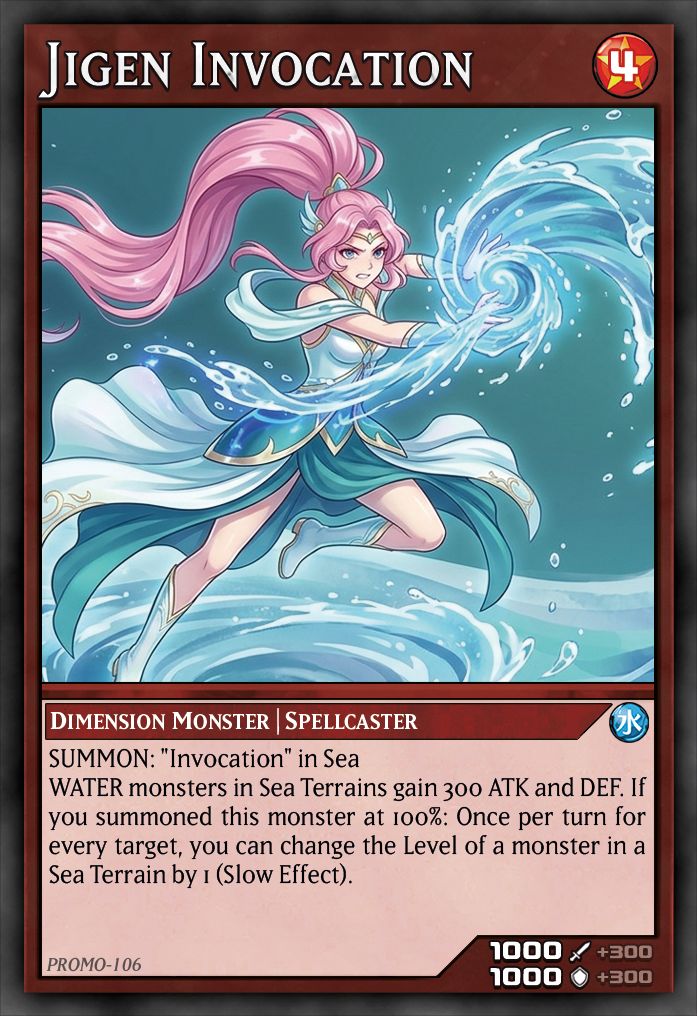
These two are completely original summoning mechanics created to support the story and explore this game even more.
Integration Summon (Togo Shōkan)
These monsters are a combination of a Duelist and a Card. The merge of the two beings. Visually they try to resemble a duelist dressed in the outfit of the card or having some other similarities to it.
The fusion of a duelist and a card (mostly a monster card) happened quite a few times in the anime so we needed a way to properly convey it without making it too busted or confusing. This is why we have Duelist Setup Rule cards and Integration Monsters, which are a way to tie the game even more to the anime.
They are summoned by simply having the specific card in hand or field, and eroding it to play this card instead. The player must have played the proper Duelist Rule card in the Setup Phase (as it represents them as a player) to summon this card. They can have any Grade symbol, as it matches the one of the material used.
Dimension Summon (Jigen Shōkan) 🆕
The first brand new summoning mechanic in this list. This was inspired by the Darkside of Dimension movie alongside a desire to explore a bit more the Terrain mechanics that Kingdom Duels offer.
These monsters are different versions of monsters that we already have, but from the space between dimensions, from a different universe, and more attuned to a specific terrain or element as a source of their powers. They must be summoned on a specific terrain you control which represents its gateway to that other different dimension.
They are summoned by consuming a Normal Summon, having the material in hand and a specific Terrain available. The material is eroded from the hand and the Dimension Summon is summoned instead.
They have a couple of unique mechanics: When you summon it you must declare if you summon it at full power (100% of ATK and DEF) or at 0 ATK/DEF (and if you do, mark it with a counter to keep track of this). Neither player take battle damage from a Dimension Monster. Instead, if it is destroyed, you lose LP equal to it’s declared ATK.
Synchro and Xyz Summon
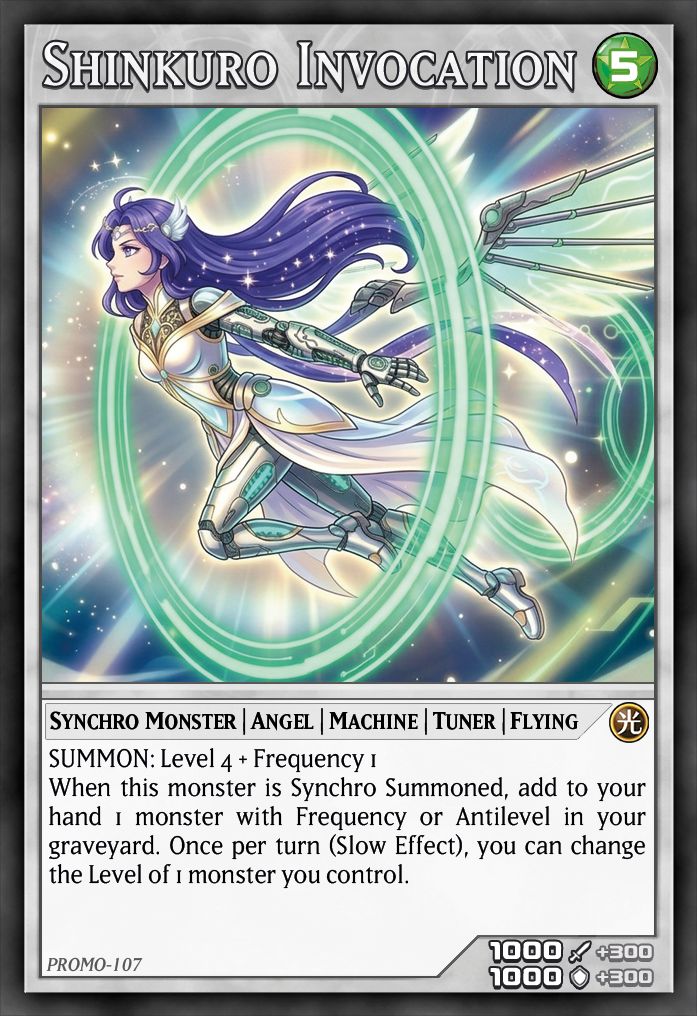
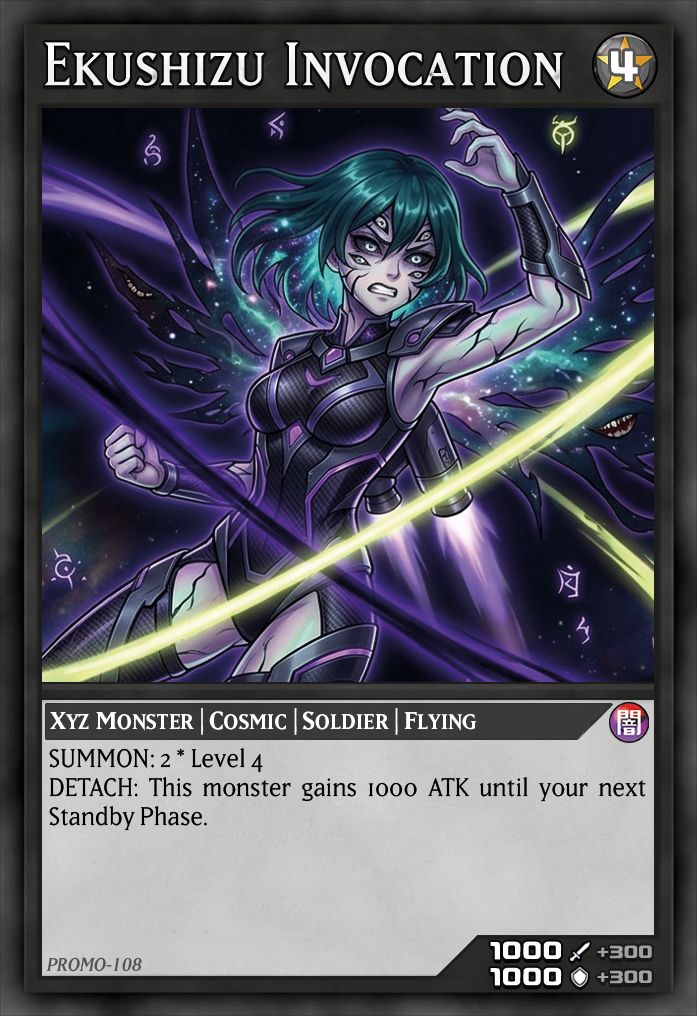
These two mechanics work really similar to their Yugioh counterparts, but do have some clarity differences that you should know about.
Synchro Summon (Shinkuro Shōkan) 🆕
Introduced in the 5D’s era, these monsters are born from a strong wavelength in the universe caused by the synchronization between two or more monsters thanks to a “tuner”.
These cards introduce the concept of “Frequency” and “Antilevel”, which are Grades similar to Levels. Therefore, Synchro Monsters can have Level, Frequency or Antilevel as their Grade symbol.
To perform a Synchro Summon, a player must combine Levels and Frequency to match the number in the Synchro monster card. The materials are sent to the graveyard.
Frequency, which is colored green, is what would be the equivalent of a Tuner’s level in the original game and is used to combine with a regular Level to perform a Synchro Summon. It is visually more noticeable so it should come in handy for quick calculations for Synchro Summoning. Antilevel, on the other hand, is colored blue and is what “Dark Synchros” had as “Negative Levels” in the original anime instead of Levels.
Xyz Summon (Ekushizu Shōkan) 🆕
Introduced in the Zexal era, these monsters are made of antimatter that traveled through the space-time continuum in an Overlay Network from beyond a black hole in a different plane of existence.
Instead of having Levels, Xyz Monsters have Ranks as their Grade symbol. They are summoned by having two or more cards of equal Level and then overlaying them, attaching the materials to the Xyz Monster. These attachments are also called Overlay Unit and are used for effects by detaching them from the Xyz Monster itself.
Additionally, Xyz Monsters can be summoned by using other Xyz Monsters as materials by a mechanic called “Rank Up” or “Rank Down”, which requires increasing or decreasing the Rank number of the material to transform it into the new Xyz Monster.
Pendulum and Link Summon
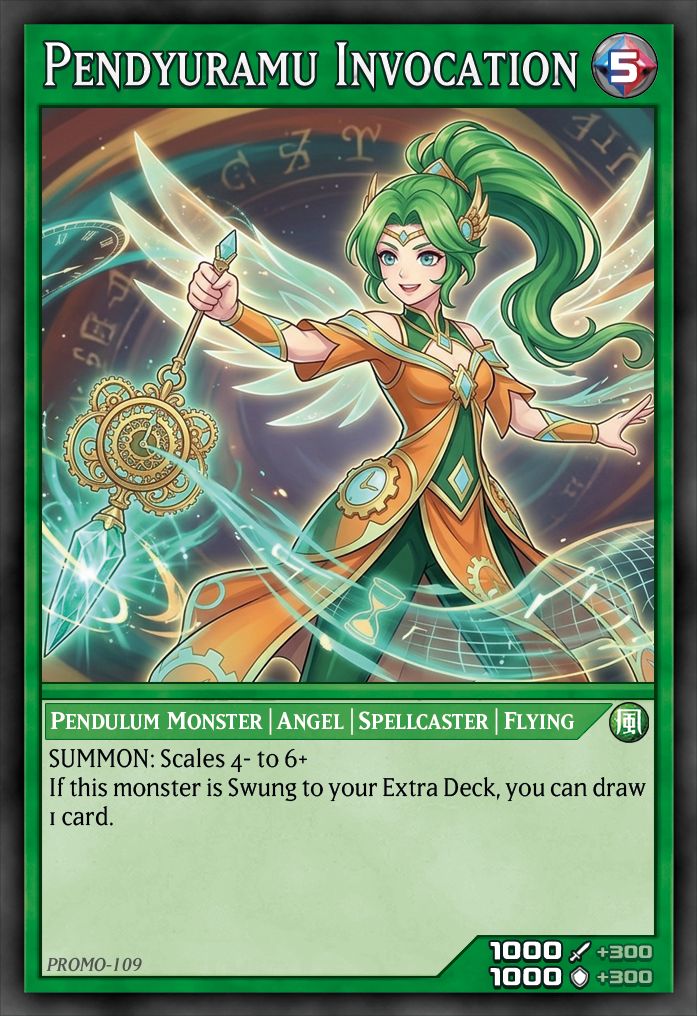
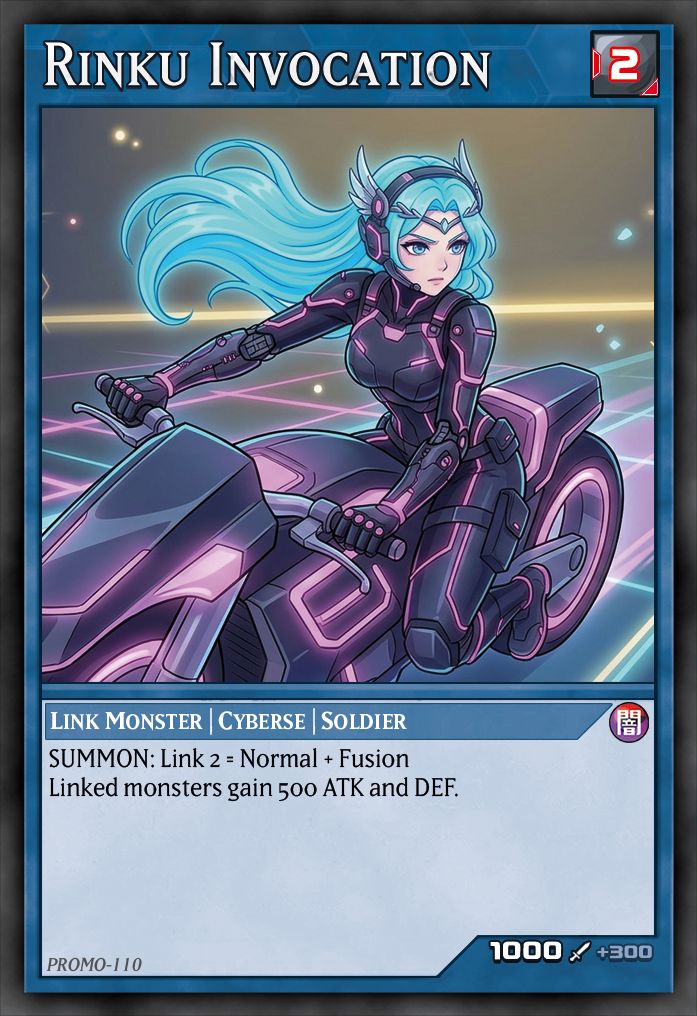
These two mechanics were largely modified to better suit our game, and are vastly different to their TCG/OCG counterparts.
Pendulum Summon (Pendyuramu Shōkan) 🆕
Introduced in the Arc-V era, these monsters are anachronistic beings that can freely travel through time as long as two spirits form a temporal bridge in a certain moment for them to appear.
Heavily changed compared to their original design, Pendulum Monsters in here are Extra Deck monsters that have a new Grade symbol called Magnitude instead of Level. In order to summon them, you need to have two Spell Monsters acting as “Pendulum Scales” in the leftmost and rightmost Spell Card Zones, meaning that their respective Levels represent the Scales. The Magnitude number of a Pendulum Monster must be contained between the two Scales in order to be summoned to the field.
If a Pendulum Monster leaves the field and its Scale is still active, then that monster returns to the Extra Deck (is “Swung” back to it). The materials (which are the Scales) stay on the field, of course, when a Pendulum Monster is summoned.
Link Summon (Rinku Shōkan) 🆕
Introduced in the Vrains era, these monsters are living digital constructs of a virtual world, created as a way to connect other monsters of different segmentations.
They are summoned by having “N” materials on the field of different summoning methods, “N” being also their Link Marker. In addition to a number, these Markers are a Grade symbol that have another dimension to it meaning that they have “arrows” that point to different zones respective to the Link monster itself. These “Linked” zones interact with the monster’s effect itself, so positioning of your cards is key.
Link Monsters can only exist in ATK Position and can be played in the backrow or in the frontrow. The materials used to summon them remain on the field unless otherwise stated.
Maximum, Rush and Lore Summon
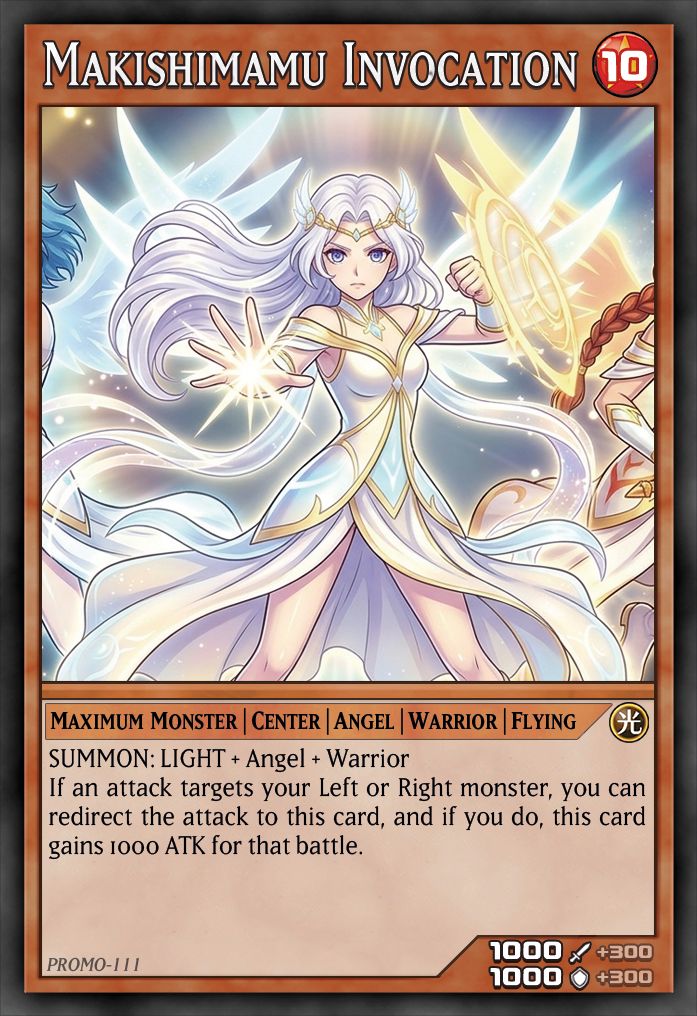
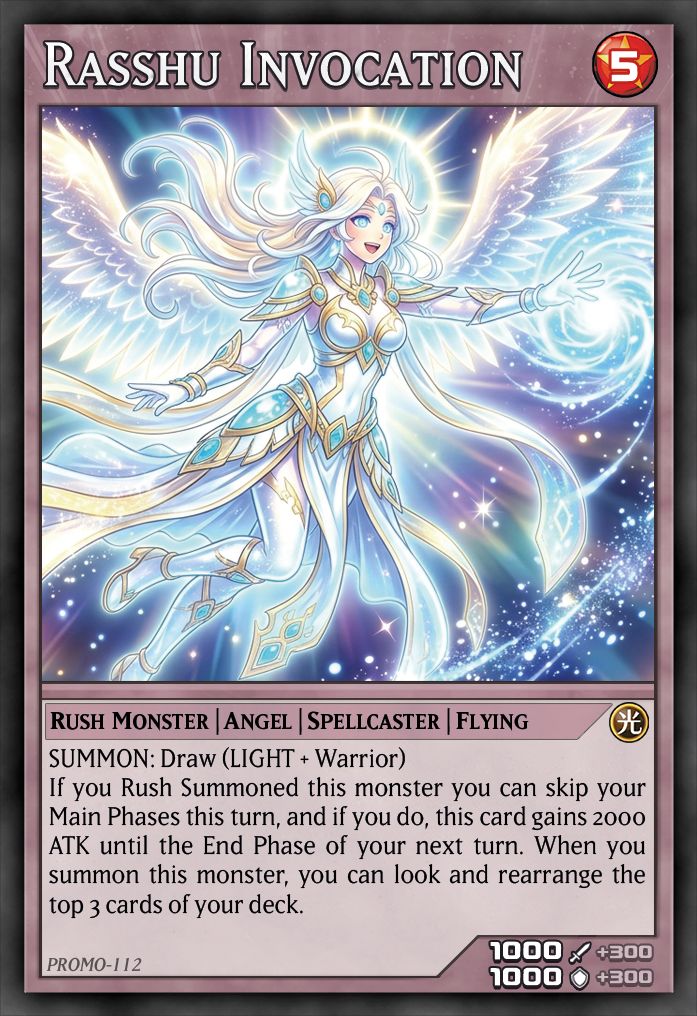
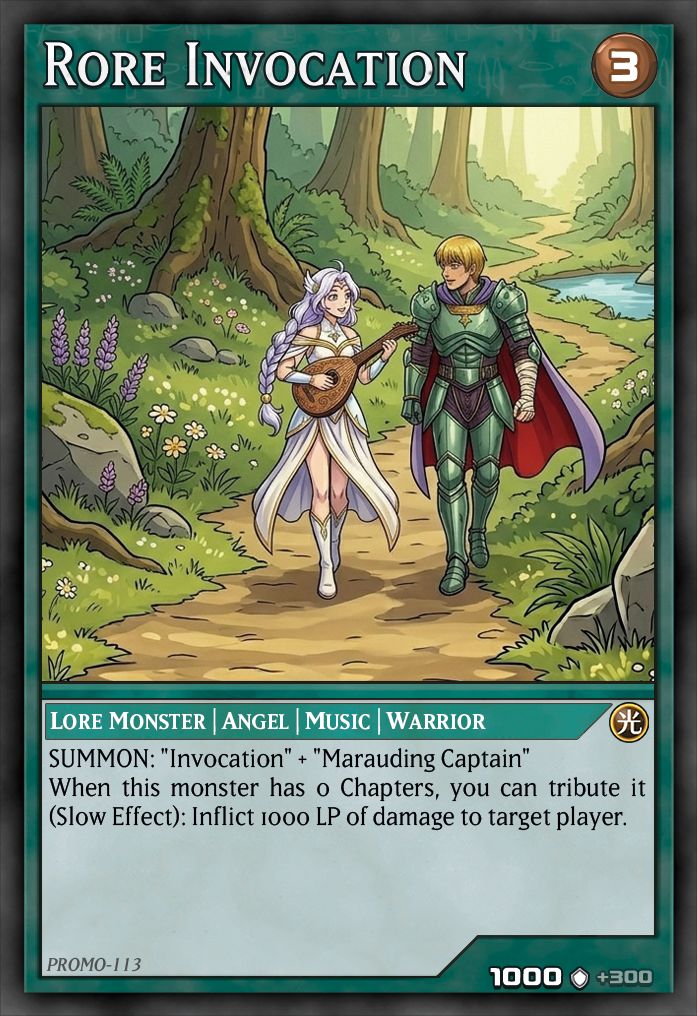
These three are the most experimental ones, and don’t even have a correlation to Yugioh Scrolls. They don’t even exists in the TCG/OCG. They are, as of now, mostly concepts from shows that have not been planned to be adapted into the story just yet, but may be in the future.
Maximum Summon (Makishimamu Shōkan) 🆕
Corresponding to the Sevens anime, these monsters exceed the limitations of the cards from which they are summoned, manifesting themselves in three cards at the same time instead of only one.
They are summoned by declaring the 3 materials from your hand and/or field and sending them to the bottom of the deck. They introduce three new monster types (Center, Left, Right) which are used for different effects. They are treated as a single monster but each card have their own effect.
Yugioh Sevens introduced this mechanic but it was never adopted into Yugioh, only being applied to Rush Duels. This is why i think it’s viable to introduce that mechanic to Kingdom Duels almost without changes. Even if Rush Duels has less monster zones to play with and a different gameplay, i think Kingdom Duels can also use this mechanic to its strengths.
Rush Summon (Rasshu Shōkan) 🆕
Corresponding to the Go Rush anime, these monsters answer to the rebellious spirit of the duelist against adversity, manifesting themselves on the battlefield at high speed when the duelist manage to get the ideal components all at once.
They are summoned immediately after drawing its components at the same time. The summoning itself happens in the Draw Phase (or whenever you draw those cards). They have Levels as their Grade symbols, and the materials are attached to them after the summon.
Yugioh Go Rush was the very first anime that didn’t feature a new summoning mechanic, so i had to come up with something cool for it. This summoning method was inspired by some elements from Contact Fusion and Ritual Summoning that were present on this show but its basis was mostly around the idea of rapidly swinging the tide of the battle by drawing multiple cards, just like the characters did in Rush Duels.
Lore Summon (Rore Shōkan) 🆕
Corresponding to the Chronicles anime, these monsters are living legends of the spirit world, tales that are created from the interactions of other cards.
Yugioh the Chronicles was the anime that completely changed the format, breaking away from weekly episodes to short-monthly-self-contained stories based on the lore of the cards and not the card game itself. I wanted to represent this in some way, so I went with an approach that tries to give more importance to the lore itself.
Lore Monsters are summoned by consuming a Normal Summon and require you to reveal the materials from your hand and/or deck. They can only exist in DEF position, and have some unique mechanics. Instead of Levels they have Chapters as their Grade symbol. Once per turn, a player can reveal from hand/field/graveyard a different card that features a monster in the artwork that was used as a material for the Lore Monster, which reduces its Chapter value by 1. If the Chapter value reaches 0 that means the end of that particular story and the Lore monster usually has a strong payoff for it.
And that’s it for now! Let me know in our Discord if you have any comments about it. The full information regarding how each mechanic actually works will be added to the Rulebook in due time.